g* Hypothesis
Sypnosis:
In the field of science(s), it becomes possible to describe / define phenomenon, via multitudes of theorems. Thus for example, the nature / characteristics of gravity can be defined via Neutonian Mechanics or using Einsteins General Theory of Relativity etc.
Thus in Newtonian Mechanics the force of Gravity whould be as follows:
F = G (M 1 . M2) / R2
Whereas In General Relativity Einstein describes Gravity as the effect of bending of Space Time.
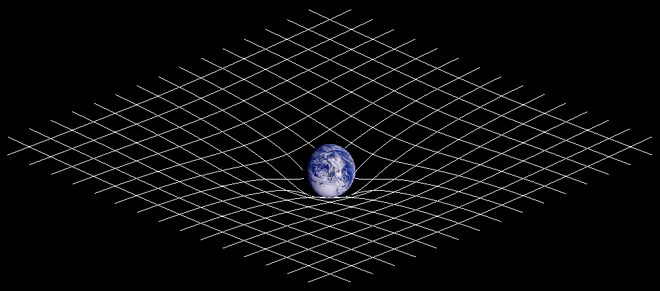
g* Hypothesis (Take 1 / Revision 1.0)
The g* hypothesis presented in this article, postulates that photons develops a mass component in the presence of matter / mass (or in the viscinity of / via interaction with the gravitons present in a dielectric medium or near a massed object).
Thus as Einstein famously and correctly predicted that the path of photons / light whould bend in the presence of the gravitational field of a Star / Galaxy (or the curvature of space time near a Star / Galaxy leading to gravitational lensing...)
Likeso...
The hypothesis presented in this article puts forward the Postulate that the path of photons bends near a Star, due to the photon getting affected / the photons' interaction with gravitons (generated in that Star). Thus in this hypothesis, whenever a photon's relative velocity decreases from the value c, it whould aquire a mass component (m > 0). Or alternatively / conversely, a photon's relative velocity whould decrease from c, due to it acquiring a mass m. Thus the instance the photon acquires a mass, it itself starts generating gravitons (becomes a source of gravitons). And thus these two sources of gravitons whould next interact with each other (causing gravitational attraction).
[Note : Most modern physicists are of the view, that the photons have zero mass, immaterial of what's it's speed is etc. Thus this g* hypothesis, whould most likely be contradictory to most mainstream views of this subject matter.
Also in this article, when it is mentioned that the velocity of a photon to be less than c, in a dielectric medium or in the presence of a graviton field, what it is inferred is the relative velocity with respect to / from the perspective of the dielectric medium / graviton field.]
I whould present a possible experimental apparatus at the end of this article, (which if possible to setup / construct) via which it may / might be possible to measure / detect whether photons aquires a mass, inside dielectric mediums (when for example it's relative velocity becomes less than c).
Now in this g* hypothesis, the reason as to why the path of photons bends when it enters a medium (which in turn whould be a concentrated / rich source of gravitons), is the acquisition of mass component by the photons. And thus now, the photon itself becomes a source of gravitons, which next starts interacting with the gravitons of the medium.
Thus a photon with an incident angel of 0° (to surface normal), should experience a symmetric force effect of gravitons. (Aka gravitons generated by the latice structure of the medium / material, should have a symmetric force on the incident photon, thus cancelling out or zeroing out, gravitational pull components in any/all directions perpendicular to the incident photon... (Note : this above statement will have to be verified via computer modelling / simulation - as a starting point -). Whereas a photon with a non 0° incident angel (to surface normal), whould have a non symmetric nett gravitational force / pull acting on it (in the direction of higher mass in the latice of the medium). Thus this photon's path will bend into that direction (of assymetric gravitational pull).
Now inline with this g* hypothesis, it whould be interesting to study / analyse, the path of photons inside a nano-tube. For as per this hypothesis, inside the nano-tube, the photons should develop a mass (due to interaction with the gravitons generated by the atoms of the nano- tube). And now these photons' path should be dictated / affected by the gravitational interactions of them with the graviton generators of the nano-tube (aka the atoms). Thus immaterial of the bends and curves of the nano-tube, whould the photons emerge from the other side (akin to water flowing through a pipe?), if / when photons enter at dead centre of a symmetrical cross section nano- tube?
Now as a continuation to this g* hypothesis...
The reason as to why a solar sail, develops / generates a force, is the acquisition of mass by the incoming photons, in the close viscinity or inside the dielectric medium of the solar reflector. Thus the emitted photons of / from the solar sail have > 0 mass (during the time period their relative velocity < c) thus causing them to generate momentum forces (equal and opposite) on the latice structure / atoms of the solar sail.
(I do agree, that these postulates deviates somewhat from the current mainstream views. But that's one advantage of being an "arm chair / hobby phycisits"... You have the freedom of stating whatever you want... for you stand innocent till proven incorrect 😁. But / thus as a "peace offer / terms of negotiated settlement", let me guarantee, that I whould either delete or correct the above, if / when conclusively proven wrong / proven incorrect beyond all iota of doubt... 🙂)
Now continuing the g* hypothesis...
We observe that materials that reflect photons, do so at the same emission angle as the angle of incidence. (Now let me be honest here... I have still not / yet not studied the Feynman diagrams, nor String Theory / M Theory etc etc. so I am not sure as to whether this point has already been addressed in them... But nevertheless let me present the postulate here... for I can delete / modify any section if / when proven incorrect...🤗 The author of this article is into modern physics, merely out of curiosity / as a hobby, and does not hold any formal degree nor has any formal education in modern physics...).
Now this section of the g* hypothesis postulates, that when a photon enters a reflective medium (its going to be reflected by a reflective surface), the development of mass by the photon does play a role in it's incident angle being equal to emission angle. What I am trying to spit out here, is to try to suggest that, probably / maybe there is some form of "gravitational sling shot" activity going inside the materials lattice structure, that causes / leads to the emission angle to be equal to the incident angle. Thus what this g* hypothesis, suggests / postulates is that, the incoming photons, transfers some amount of energy to the electrons of the lattice (thus causing the electrons to transfer to higher energy states), and then some radical / prodigal activity happens inside the dielectic structure, causing the photon to get subjected to a "prodigal gravitational sling shot", that guarantees that the emission angle matches the incident angle. And on its way out, the photon gets re-energised, by the electrons that falls back to their respective ground states.
Could this be feasible / possible, or just...? Time only will tell...
(Or how about a photon that enters the "graviton ocean" of say a dielectric medium, gets "quantum ricocheted" when the photon develops a mass and... But then why / how does a photon with incident angle of 0° (to surface normal), onto certain substances / surfaces, not go straight into the medium, but get reflected / bounced back ... 🥴 Why why!? Does the extremely high velocity of the photons -combined with it's newly aquired mass- play a role? Like a rubber ball bouncing off a wall... Could such be possible or could such forces as well play a role in addition to electron excitation phenomenons...)
g* Experimental Setup 1 :
Now one possible experimental setup that most likely might be possible with currently available measuring equipments, whould be to measure the linear / lateral displacement of incoming photons and emitted photons. Also measurement of time delays of the reflected photons, with respect to photons that travelled the same distance in vacuum, might also give some valuable clues... These measurements whould be most helpful to get a clearer picture, of where exactly (aka : at what locations / depths in the latice), the photons got "reflected / bounced back".
The currently accepted view is that, the falling electron releases a new quanta of energy in the form of a photon. Now I am not exactly sure as to whether Quantum mechanics etc. have an accepted view, as to why / how the emitted photon's direction vector is a mirror image of the incident photon's direction vector ? The question is : how does the falling electron "know / remember" as to what the incidence vector of the incoming photon was? Could some quantum entanglement "magic"/ phenomenon got involved...? Does String theory / M theory etc have an answer...? All these are possibilities that whould have to be looked into... (Thus via elimination techniques, hopefully an answer might be abled to be narrowed down...?)
As a continuation of this g* hypothesis, it would be interesting to further study (if possible), as to why for example carbon atoms or graphite crystals absorbs most all incoming photons, BUT when formed into clear diamond lattice structures (the same carbon atoms) just let most all photons to pass through (with least amounts of absorption)... And then even in Diamond crystals why is that industrial grade diamonds absorb most light (is it because of impurities or... ) Could what happens inside nano-tube structures, possibly be a hint as to why certain structures let light through but some others...?
g* Experimental Setup 2 :
Yet another experimental setup suggested as part of this g* hypothesis, whould be to measure the bending of photons near sharp edges. Thus this experiment whould study how much angle the path of photons whould bend, depending on their distance to the atoms of a razor sharp edge. This razor sharp edge should also be made of materials of different Atomic masses (ex. Carbon, Calcium, Silicon, Aluminium, Iron, Lead etc etc.), and then the effect of Atomic Mass, on the angles of diflections of the photons, could be analysed (aka to identify as to whether Atomic Mass has or has not any correlation to...) Next the razor sharp edges will be cooled to as low a temperature as possible, and again readings whould be obtained to ascertain any effects of temperature, on the deflections of photons. The purpose of these studies whould be to identify any patterns of photon deflections, to either validate or negate the g* hypothesis(es).
Also observe the interesting similarity of say a water / sound wave bending at an edge AND photons bending at an edge.
Now with regards with water (or any non-compressible liquid) it is well known that what causes the wave to bend at an edge, is the such of vandevaal forces or hydrogen bonds, which causes the water / liquid molecules at the other side of the edge to get lifted or pushed down (when a wave reaches the edge).
Though the above is well known / understood, what is still not yet properly understood, is WHAT whould cause a photon near and edge to bend towards that direction?
Next the real fun may begin, when one expands the above experiments to multiple adjacent edges (narrow slits) and double slits... (All, whom have studied modern physics to certain extents, may realize where this rabbit hole may / might... Let's keep fingers crossed... 😁. Could statistics of scotastics come to the rescue / be the answer...)
g* Experimental Setup 3 :
Now in conclusion to this article, let me present a "hypothetical apparatus", that hopefully may / might answer / validate / negate some of the hypothesis(es), presented in this article (if current feasibility paradigms so permits it's construction... it's a nano-tech apparatus...)
Thus in above, two (either) reflective latice or transparent latice structures (of nano-scale / atomic scale) are suspended, in a nano-scale balance apparatus. Now the balance whould be at equilibrium, as both sides are of same / equal mass / weight.
Next one latice structure whould be bombarded with photons, on a lateral / horizontal plane (perpendicular to the field of gravity). Thus the idea whould be to try to detect, as to whether the bombardment of photons on one latice structure, whould generate / cause the addition of mass to that effected lattice.
The rational is : if g* hypothesis is to hold true, then the photons that enters into the said lattice structure, should develop a mass component. Thus the nett mass of that lattice structure should increase, which should next be detectable or measurable via suitable nano-tech measurement apparatus (aka the balance should tilt in that direction).
Thus, if the construction of above apparatus, is technically feasible... and one finds that it gives negative results...
Possible Conclusions:
1. g* hypothesis does not hold true / is falsified / negated.
2. The nano-tech apparatus, suggested or constructed, does not produce enough mass imbalance, sufficient to produce enough gravitational forces as to overcome the hinge frictions or to cause a momentum shift (aka make angular v > 0), in the scale / balance.
3. ...
Ly De Sandaru


Comments
Post a Comment